What Should You Look For In A Swimming Coach?
Choosing a swimming coach in Singapore involves more than finding someone who can swim well. A good coach must also be able to teach clearly, understand different learning abilities, manage safety, communicate effectively and help each swimmer progress towards realistic goals.
Whether you are looking for lessons for yourself or your child, taking time to evaluate the coach before booking can make the entire learning experience safer, more comfortable and more productive. The right choice will also depend on whether you are a complete beginner, improving technique, overcoming water anxiety or working towards a structured swimming programme.
Concise Answer
To choose a swimming coach in Singapore, consider the coach’s qualifications, experience, safety awareness, teaching style, communication and ability to work with your age group or ability level. The right coach should assess your starting ability, explain realistic goals, adapt lessons when necessary and create an environment where you feel safe, comfortable and confident learning.
What Should You Look For In A Swimming Coach?
A swimming coach should be evaluated as both a swimmer and an educator. Knowing swimming techniques is important, but being able to identify why a learner is struggling and explain how to improve is equally valuable.
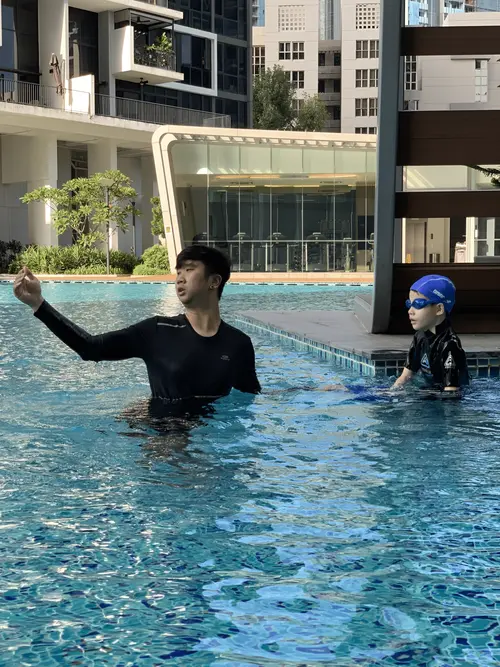
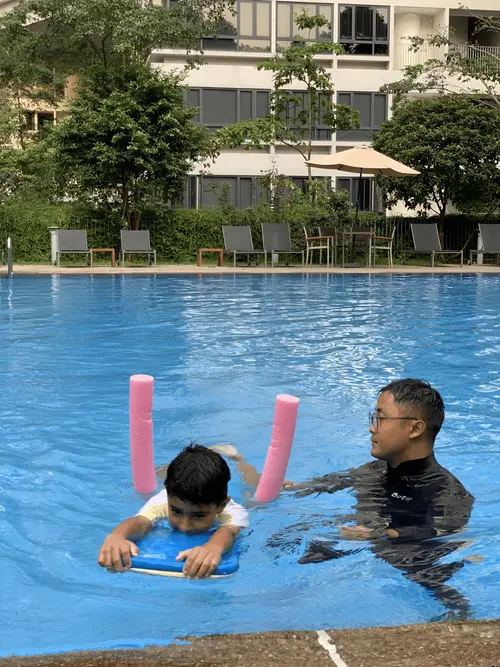
A beginner who fears putting their face underwater requires a very different approach from an experienced swimmer refining freestyle technique. Parents may also need a coach who understands how to maintain a child’s attention while progressively developing water confidence and safe swimming habits.
Before choosing a coach, consider whether their experience matches what you actually need rather than simply selecting the first available instructor.
Check Relevant Coaching Qualifications And Credentials
Qualifications provide an important starting point when evaluating a coach. In Singapore, the National Registry of Coaches (NROC) is administered by Sport Singapore to support coaching standards and professionalism.
NROC-registered coaches are required to meet recognised coaching requirements, maintain relevant professional development and comply with coaching standards. Sport Singapore also states that NROC coaches hold Standard First Aid certification, including CPR and AED requirements.
Qualifications should not be the only consideration, but they provide useful evidence that a coach has undergone structured training rather than relying solely on personal swimming ability.
Consider The Coach’s Experience With Your Type Of Swimmer
Experience is most useful when it matches the learner.
An excellent competitive coach may not necessarily be the best fit for a nervous adult taking their first swimming lesson. Similarly, a coach experienced primarily with adults may use a very different teaching approach from someone who regularly works with young children.
When speaking to a swimming coach, ask about their experience with swimmers of a similar age, starting ability and objective. If you are learning because of water anxiety, tell the coach. If your child is preparing for SwimSafer, that should also be made clear from the beginning.
The more accurately the coach understands your objective, the easier it is to determine whether the match is appropriate.
Look At How The Coach Approaches Water Safety
Swimming lessons should develop confidence without ignoring safety.
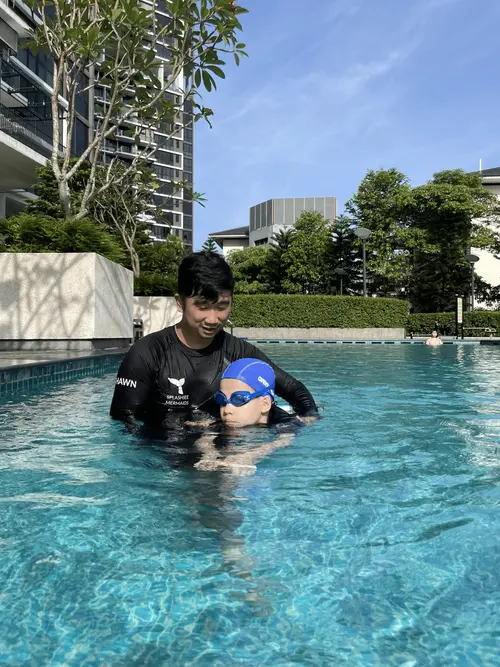
A responsible coach should understand the learning environment, recognise the swimmer’s current limitations and avoid pushing a learner into situations they are not prepared to manage safely. For beginners, water confidence, controlled breathing, floating, safe entry and recovery can be as important as learning complete strokes.
Requirements become particularly important for structured programmes such as SwimSafer. Sport Singapore states that SwimSafer 2.0 instructors must possess valid NROC membership, Understanding Safe Sport as a Coach, Standard First Aid with AED and SwimSafer 2.0 instructor certification.
Parents enrolling children into Splashiee’s SwimSafer lessons should therefore consider programme-specific credentials alongside general coaching experience.
Find A Teaching Style That Matches The Learner
There is no single coaching style that works for everyone.
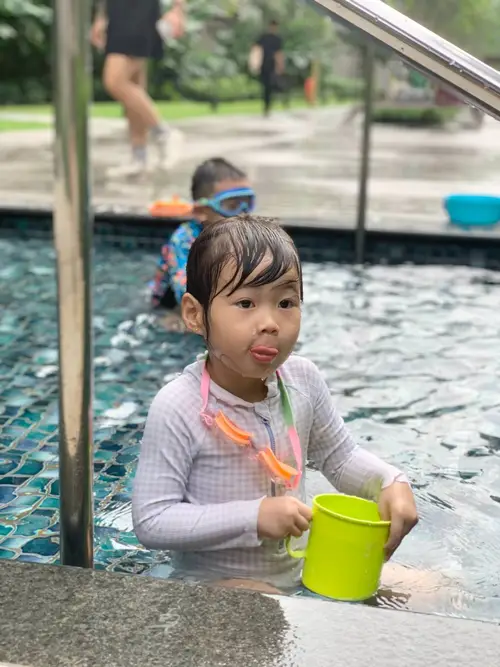
Some learners respond well to detailed technical explanations. Others learn more effectively through demonstrations and repeated practice. Young children may need short, engaging activities, while nervous adults may require more time before moving from basic water confidence exercises into stroke development.
The important question is whether the coach can adapt.
A good coach should be able to recognise when an exercise is not working and explain the same concept differently rather than repeatedly using an approach that leaves the swimmer frustrated.
For learners who specifically feel more comfortable receiving instruction from a woman, Splashiee also offers access to a female swimming coach. Personal comfort can be a legitimate factor when choosing the environment in which someone learns.
Pay Attention To Communication Before Booking
The way a coach communicates before the first lesson can reveal a great deal about how lessons may be conducted.
A useful initial conversation should involve more than simply confirming the price and meeting time. The coach or swim school should want to understand who is learning, their approximate ability, previous swimming experience, objectives and any concerns that could affect the lesson.
Parents should also know how progress will be communicated. Adult learners may want to understand what they are working towards and how improvements will be measured.
Clear expectations at the beginning reduce misunderstandings later.
Decide Whether Private Or Group Lessons Suit You Better
Choosing the right coach also means choosing the right learning environment.
Splashiee’s private swimming lessons provide more individual attention and allow the coach to adjust the lesson closely around one swimmer’s needs. This can be particularly useful for nervous beginners, learners with specific technical weaknesses or students who prefer personalised instruction.
Group lessons may suit swimmers who enjoy learning alongside others and are comfortable following a shared lesson structure.
Neither format is automatically better. The appropriate choice depends on confidence, budget, learning preference, availability and the level of individual attention required.
Consider Location And Scheduling Practicalities
Even an excellent swimming coach may not be the right long-term choice if attending lessons consistently becomes difficult.
In Singapore, work schedules, school commitments, travel time and pool availability can affect how regularly lessons take place. Before committing, confirm where lessons are conducted, what timings are realistically available and how rescheduling works.
For adults balancing swimming with work and family commitments, Splashiee’s adult swimming lessons can be discussed according to the learner’s ability and practical scheduling needs.
A sustainable arrangement is important because regular attendance usually supports better continuity than repeatedly stopping and restarting lessons.
Be Cautious Of Guaranteed Results In A Fixed Number Of Lessons
Swimming progress varies from person to person.
Starting ability, water confidence, coordination, lesson frequency and practice can all affect development. For this reason, promises that every beginner will become a competent swimmer after an identical number of lessons should be viewed cautiously.
A better coach establishes realistic milestones and reviews them as the swimmer develops.
You might begin by working towards comfortable submersion and floating, then independent propulsion, breathing coordination and eventually stronger stroke technique. Progress becomes much easier to understand when measured through capabilities rather than an arbitrary lesson count.
Choose A Coach Who Helps You Build Long-Term Confidence
Ultimately, choosing a swimming coach in Singapore should come down to trust, competence and suitability.
Qualifications and experience matter, but so do patience, communication and the ability to adapt teaching to the learner in front of them. The best coaching relationship is one where swimmers understand what they are working towards, feel comfortable asking questions and receive constructive guidance when progress becomes difficult.
At Splashiee Mermaids Swim School, we work with adults, children and swimmers of different abilities. Before beginning, speak to us about your current swimming ability, concerns and goals so we can help you identify an appropriate lesson arrangement and start your swimming journey with greater confidence.
Frequently Asked Questions

What Qualifications Should A Swimming Coach Have In Singapore?
Relevant coaching qualifications, first aid knowledge and recognised professional credentials are useful indicators. NROC registration provides one recognised Singapore framework, while SwimSafer instructors require additional Sport Singapore-approved credentials when conducting the national SwimSafer programme.
How Do I Know If A Swimming Coach Is Good?
Look beyond swimming ability. A good coach should communicate clearly, assess your current level, adapt exercises, prioritise safety and explain your progress. Experience teaching swimmers with similar ages, abilities and goals is also important.
Should I Choose A Private Or Group Swimming Coach?
Private lessons provide greater individual attention, while group lessons offer a shared learning environment. The better option depends on your confidence, learning style, goals, budget and whether you require personalised correction or additional reassurance.
Is A Female Swimming Coach Better For Female Learners?
Not automatically. Coaching quality depends primarily on qualifications, experience, communication and teaching ability. However, some women, girls or parents may feel more comfortable with a female coach, making personal preference an appropriate consideration when choosing lessons.
Click on the link to find out more about Splashiee Mermaid’s lesson package. Chat with our head coach today!
Home
About Splashiee Mermaids
Swimming Coach
SwimSafer
Private Swim Lessons
Group Swimming Lesson
Ladies Swimming Lessons
Childs Swimming Lessons
Whatsapp Us