What Determines How Quickly You Learn To Swim?
One of the most common questions we hear from beginners and parents is how many swimming lessons it takes to learn to swim. It is understandable to want a clear number when planning around school, work, family commitments and lesson costs.
However, swimming progress cannot be measured accurately by lesson count alone. Two people can attend the same number of lessons and develop at very different rates because their starting ability, confidence in the water, coordination, practice frequency and individual goals are different.
Concise Answer
There is no fixed number of swimming lessons needed to learn to swim. Progress depends on starting ability, water confidence, lesson frequency, practice, age and personal goals. Instead of counting sessions, swimmers should measure progress through milestones such as controlled breathing, floating, independent movement, safe recovery and swimming a suitable distance confidently.
What Determines How Quickly You Learn To Swim?
Learning to swim is a progression rather than a fixed package of lessons. A complete beginner may initially need to become comfortable entering the water, submerging the face, controlling breathing, floating and moving independently before focusing on complete swimming strokes.
Another learner may already feel comfortable in water and mainly require coaching to improve body position, breathing rhythm or stroke technique.
At Splashiee Mermaids Swim School, we believe the more useful approach is to understand where the swimmer is starting, establish realistic milestones and adjust the lessons as progress develops.
Your Starting Swimming Ability Matters
A learner who is already comfortable in a swimming pool begins from a different position from someone who is nervous about leaving the poolside.
Previous water exposure can make a significant difference. A child who regularly plays in pools may already understand basic water movement, while an adult who has avoided swimming for many years may require additional time to build confidence before learning complete strokes.
Our adult swimming lessons therefore focus on the swimmer’s existing ability rather than assuming everyone should progress according to the same timetable.
Water Confidence Can Affect Learning Speed
Swimming involves more than physical coordination. Feeling comfortable in the water is an important foundation.
Someone who becomes anxious when their face enters the water may find breathing exercises challenging even if they are physically fit. Likewise, learners who are uncomfortable in deeper water may tense their bodies, which can make floating and maintaining an efficient swimming position more difficult.
For these swimmers, progress may initially appear slower because the priority is establishing confidence. Once that foundation improves, technical swimming development can often become much easier.
Lesson Frequency And Consistency Make A Difference
Regular lessons help swimmers maintain familiarity with the movements they are learning. Swimming requires coordination between breathing, body position, kicking and arm movement, and these patterns usually become more natural through consistent repetition.
Large gaps between sessions may mean that beginners spend part of the next lesson rebuilding their confidence or remembering movements from the previous class.
However, this does not mean every learner needs an intensive schedule. A consistent routine that fits comfortably around work, school and family commitments is usually more useful than attending many lessons quickly and then stopping for an extended period.
Do Children And Adults Learn Swimming Differently?
Adults and children can both become capable swimmers, but they may respond differently to instruction.
Children often benefit from repetition, simple progressions and activities that help them become comfortable in the water naturally. Adults may prefer understanding why a particular breathing technique, kick or body position works before practising it repeatedly.
Adults may also arrive with specific concerns such as previous negative swimming experiences, fear of deep water or frustration from trying to learn independently.
Our children’s swimming lessons and adult programmes therefore use age-appropriate approaches while working towards the same fundamental objective: developing safer, more confident and increasingly independent swimmers.
Private Or Group Lessons: Does The Format Affect Progress?
The type of lesson can influence how swimming instruction is delivered.
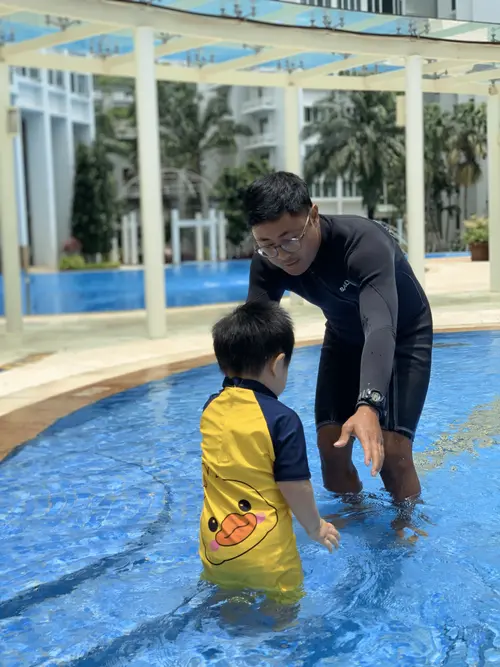
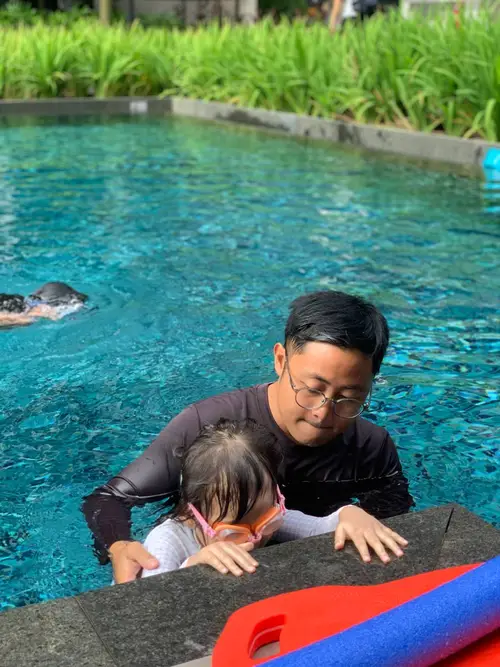
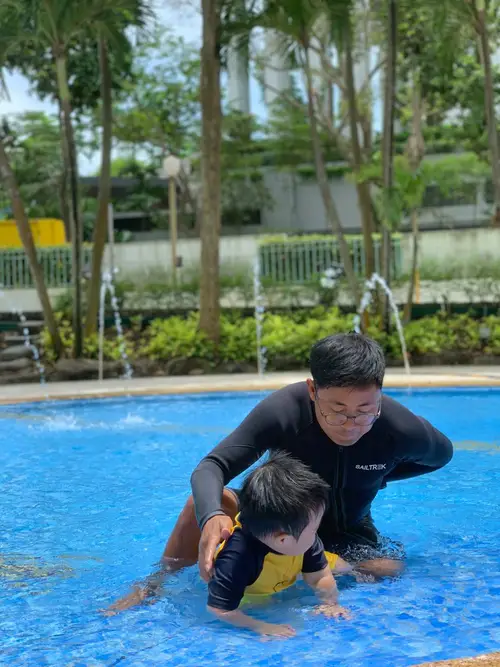
During private swimming lessons, a coach can focus entirely on one learner, observe individual movements closely and adjust exercises according to specific strengths or weaknesses. This can be useful for nervous beginners, swimmers with particular technical difficulties or learners who prefer individual attention.
Group swimming lessons provide a different learning environment. Learners can practise alongside others, observe similar exercises and develop confidence within a shared class.
Neither format guarantees faster progress for everyone. The most suitable choice depends on the swimmer’s personality, objectives, confidence and learning preferences.
What Does It Actually Mean To Learn To Swim?
The phrase “learn to swim” can mean very different things to different people.
For a complete beginner, success might initially mean floating independently and reaching the side of the pool safely. Someone else may want to swim 50 metres continuously, while another swimmer may want efficient freestyle technique for fitness.
Swimming ability is therefore better assessed through practical competencies rather than simply counting completed lessons.
Singapore Aquatics’ SwimSingapore framework similarly promotes progressive aquatic development, beginning with fundamental swimming skills and developing towards broader swimming proficiency and lifelong participation.
Water Safety Should Come Before Swimming Speed
Being able to perform a recognisable swimming stroke does not automatically mean a swimmer is confident or prepared for different situations in the water.
Controlled breathing, floating, safe entry and exit, maintaining composure and recovering to a safe position are important parts of learning to swim.
Singapore’s SwimSafer programme also takes a progressive approach to swimming proficiency, water survival and safety. Children following this pathway can consider our SwimSafer lessons as part of developing structured swimming and water-safety skills.
Progress should therefore be evaluated according to what the swimmer can do safely and independently, not simply how quickly they can complete a particular stroke.
Look At Swimming Milestones Instead Of Lesson Numbers
A better question than “How many lessons have I completed?” is “What can I do now that I could not do before?”
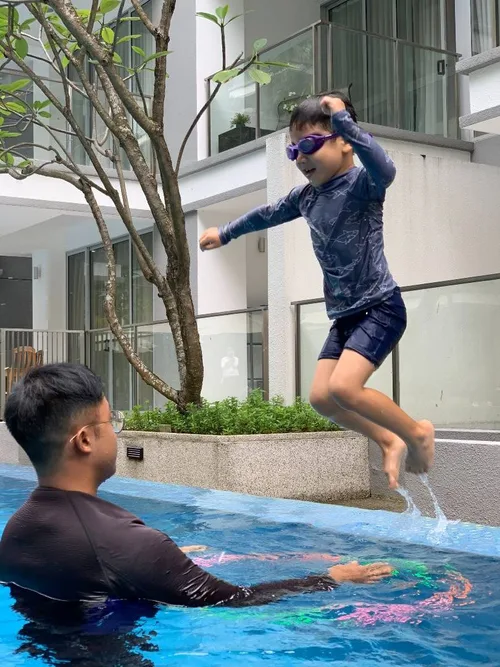
A learner who previously refused to place their face underwater may now exhale comfortably. An adult who depended on the pool wall may begin floating independently. A child who initially required assistance may gradually swim a meaningful distance without physical support.
These improvements represent genuine progress.
At Splashiee Mermaids Swim School, we prefer to focus on the swimmer’s next achievable milestone instead of creating pressure around an arbitrary number of lessons.
What If Swimming Progress Feels Slow?
Progress is not always linear. Swimmers may improve quickly during one period and then spend several lessons working through a difficult breathing pattern, body position or stroke correction.
Fear, tiredness, irregular attendance and limited practice can also affect how quickly skills become comfortable.
If progress appears to have stalled, the teaching approach should be reviewed rather than simply repeating the same exercise. A professional swimming coach can adjust drills, simplify a movement, revisit an earlier foundation or identify a technical issue that may be preventing improvement.
Changing the learning environment or lesson format may also help some swimmers progress more effectively.
Build A Swimming Journey You Can Maintain
There is no universal answer to how many swimming lessons it takes to learn to swim because every swimmer begins from a different point and may have a different definition of success.
What matters most is receiving appropriate instruction, attending lessons consistently and gradually developing confidence, technique and water-safety skills.
Whether you are learning as an adult, arranging swimming lessons for your child or returning to the pool after many years, we recommend starting with an assessment of your current ability and objectives. From there, we can help you choose a suitable lesson format and build your swimming skills at a comfortable, sustainable pace.
Frequently Asked Questions

How Many Swimming Lessons Does A Complete Beginner Need?
There is no universal number of lessons for a complete beginner. Progress depends on water confidence, coordination, consistency, practice and personal goals. A coach should evaluate swimming milestones and safety skills rather than promise results after a fixed number of sessions.
Is One Swimming Lesson Per Week Enough To Learn?
One swimming lesson per week can support steady progress when attendance is consistent. Some learners may benefit from additional practice or more frequent instruction, but maintaining a sustainable routine is generally more useful than intensive lessons followed by long periods without swimming.
Do Adults Take Longer To Learn Swimming Than Children?
Not necessarily. Adults and children learn differently, and progress depends more on confidence, previous water experience, coordination, consistency and goals than age alone. Adults who follow instructions well and practise regularly can also make significant progress.
Are Private Swimming Lessons Faster Than Group Lessons?
Private lessons provide more individual attention and allow coaches to tailor exercises closely to one swimmer. This may help some learners progress efficiently. Group lessons can also be effective, depending on the swimmer’s confidence, learning style and need for personal guidance.
Click on the link to find out more about Splashiee Mermaid’s lesson package. Chat with our head coach today!
Home
About Splashiee Mermaids
Swimming Coach
SwimSafer
Private Swim Lessons
Group Swimming Lesson
Ladies Swimming Lessons
Childs Swimming Lessons
Whatsapp Us