Knee Osteoarthritis: Is Swimming Good for Your Knees?
Knee pain becomes more common with age, especially from 40 onwards (HealthHub). If your doctor has told you the cause is knee osteoarthritis, you may be wondering whether swimming will help your knees or strain them. This guide covers what the research shows, which strokes and kicks suit sore knees, and how to start gently in the pool.

Yes, swimming suits knee osteoarthritis well. The water carries much of your body weight, so your knees bend and straighten under far less load, and in a 12-week trial swimming eased joint pain and stiffness as much as cycling did. Freestyle and backstroke with a relaxed flutter kick keep the knee in a comfortable range, and water walking is an easy place to begin.
Knee Osteoarthritis: What Happens Inside the Joint
In knee osteoarthritis, the cartilage lining the joint gradually wears, and the fluid inside the knee loses some of its shock-absorbing quality (Changi General Hospital). The hospital notes that pain is often worse in the morning or after sitting still, and can rise after weight-bearing activity such as long walks or stairs.
Women are about 40 percent more likely than men to develop knee osteoarthritis, a figure Arthritis-Health reports from a 2013 study (Arthritis-Health). Changi General Hospital recommends aerobic and strengthening exercise guided by a physiotherapist, and advises against prolonged rest. If your knees ache alongside other joints around menopause, our guide to menopause joint pain explains that wider pattern.
What the Research Says About Swimming
The clearest evidence comes from a trial in the Journal of Rheumatology. Forty-eight inactive middle-aged and older adults with osteoarthritis swam or cycled for 45 minutes, three days a week, for 12 weeks. Both groups reported less joint pain and stiffness and fewer limits on daily activity, their knee power rose by 15 to 30 percent, and swimming did as well as cycling (PubMed).
A 2025 review in The BMJ pooled 217 trials with 15,684 people and found aerobic exercise such as walking, cycling or swimming the most likely to help pain, function and quality of life in knee osteoarthritis. The researchers rated that evidence as moderate certainty (BMJ Group).
A US study of adults in the Osteoarthritis Initiative also found that people with a history of swimming had less frequent knee pain and less knee osteoarthritis on X-rays than non-swimmers (PM&R, 2020). It looked back at past activity, so it shows a link rather than proof.
Why Water Suits Sore Knees
Water holds you up. The Arthritis Foundation explains that the more of your body is under water, the lighter the load on your joints, and that buoyancy gives you freedom of movement while it supports you (Arthritis Foundation).
Versus Arthritis adds that moving in water reduces pressure on joints and can ease stiffness (Versus Arthritis). For a stiff knee, that support lets you bend and straighten the joint through a fuller range than feels comfortable on land, while your thigh and hip muscles still work against the water. HealthHub also suggests low-impact activities such as walking or swimming for people starting to exercise with knee pain (HealthHub).
Strokes and Kicks That Feel Kinder to Your Knees
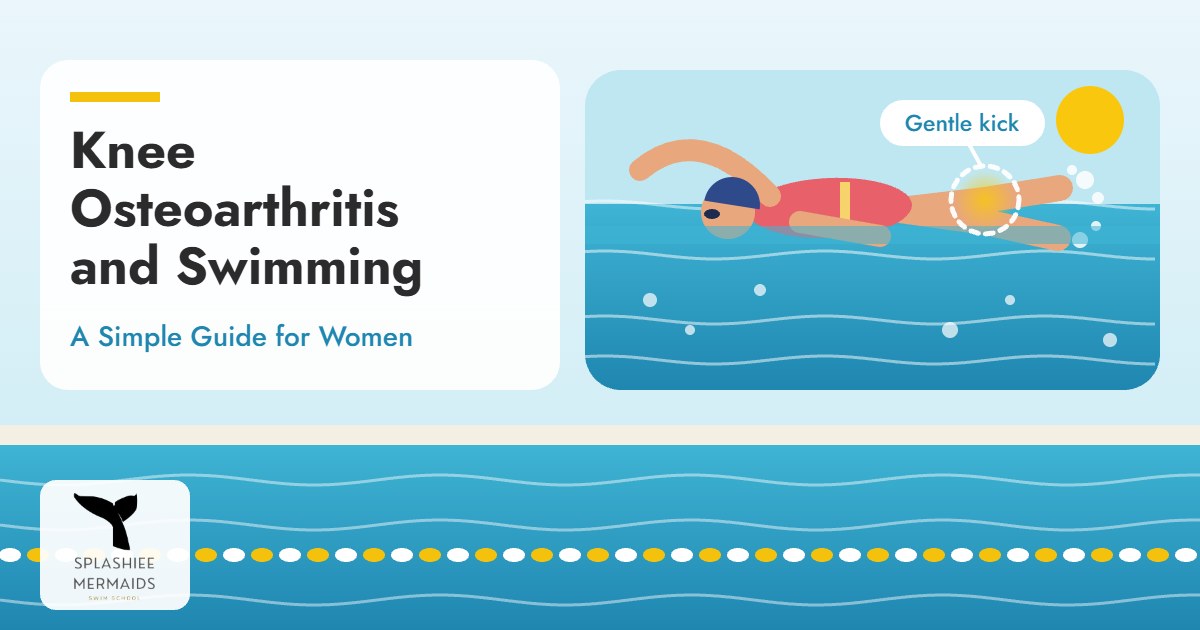
Freestyle and backstroke use a flutter kick, a small, steady up-and-down movement that starts at the hips with the knees only slightly bent. It keeps the knee moving in a comfortable range, which is why these two strokes are a good place to start with knee osteoarthritis.
Breaststroke needs more care. Sports physicians writing in the Aspetar Sports Medicine Journal note that pain on the inner side of the knee is most common in breaststroke swimmers, because the whip kick snaps the knee straight while the lower leg turns outwards (Aspetar Sports Medicine Journal). If you love breaststroke, try breaststroke arms with a gentle flutter kick, or hold a pull buoy between your thighs so your arms do the work.
Keep the kick relaxed, and ease off if a movement brings sharp pain. HealthHub advises that exercise for knee pain should keep the pain at the same level or lower (HealthHub).
Water Walking and Simple Pool Exercises
Water walking is a gentle first step if laps feel like a lot. The Arthritis Foundation suggests a basic forward walk with your shoulders over your hips, rolling from the ball of the foot to the heel and swinging your arms opposite your legs (Arthritis Foundation). Water shoes help you grip the pool floor.
Versus Arthritis also suggests aqua aerobics and aqua jogging, and recommends a warm-up and cool-down every time (Versus Arthritis). Begin with short sessions and add a few minutes each week as your knees settle into the routine.
Pair the Pool With Strength Work and a Healthy Weight
Strong thigh muscles help support the knee. Changi General Hospital pairs aerobic exercise with strengthening work guided by a physiotherapist, so your pool sessions sit well beside a simple home programme from your physio.
Weight matters too. In a study of 142 older adults with knee osteoarthritis, each kilogram of weight lost was linked to about a fourfold drop in the load on the knee with every step (Arthritis & Rheumatism, 2005). Swimming uses energy while it spares your knees, so it fits well into a weight plan agreed with your doctor.
Start Gently With a Female Coach
Knee osteoarthritis feels different for every woman, so we begin at a pace that feels comfortable for you. Versus Arthritis suggests checking with your doctor before you start a new exercise routine (Versus Arthritis). Our coaches are experienced and vetted before they join, and they track your progress lesson by lesson, adjusting your kick and stroke to suit your knees.
At Splashiee Mermaids Swim School, every lesson is taught by a female swimming coach, at a public pool near you or at your own condo pool. Our ladies swimming lessons welcome beginners and women returning to the water. Message us on WhatsApp to arrange your first lesson.
Frequently Asked Questions

Can I swim breaststroke with knee osteoarthritis?
Yes, with a gentler kick. The breaststroke whip kick puts the most strain on the inner knee, so breaststroke arms with a flutter kick, or a pull buoy between your thighs, keeps the stroke kinder to your knees. Your coach can help you find a version that feels comfortable.
How often should I swim with knee osteoarthritis?
In the 12-week trial, people swam for 45 minutes, three days a week, and reported less pain and stiffness. Start with shorter sessions and build towards that over several weeks, as your knees allow.
Is warm water better for arthritis?
The Arthritis Foundation gives 83 to 90 degrees Fahrenheit, about 28 to 32 degrees Celsius, as the recommended temperature for warm water exercise. Ask your pool which temperature it keeps, and choose a heated pool if you can.
When should I see a doctor about knee pain?
HealthHub advises seeing a doctor early for a hot, swollen knee, including one with a fever, or for knee pain that worsens quickly. See your doctor too if your pain keeps rising, and check with them before you start a new exercise routine.
Click on the link to find out more about Splashiee Mermaid’s lesson package. Chat with our head coach today!
Home
About Splashiee Mermaids
Swimming Coach
SwimSafer
Private Swim Lessons
Group Swimming Lesson
Ladies Swimming Lessons
Childs Swimming Lessons
Whatsapp Us