Swimming Hair Care for Women Who Swim Regularly
If you swim regularly, you have probably noticed your hair feeling drier, rougher or harder to brush through after a run of pool sessions. Good swimming hair care does not mean staying out of the water or buying a shelf of products. It comes down to a handful of habits before and after each swim, and most of them cost nothing.
We teach women at public pools and private pools, and the routine below is the one we suggest to anyone worried about long, coloured or chemically straightened hair. It is built on dermatologists’ advice rather than product marketing. If you are still choosing a class, our guide to women only swimming compares women only and mixed lessons.
Good swimming hair care starts before you get in: wet your hair with clean water, smooth on a leave-in conditioner or light oil, and wear a swim cap if you can. After the swim, rinse straight away, wash with a gentle or swimmers’ shampoo and finish with a deep conditioner. Regular swimmers can add a clarifying wash each week.
What Chlorine Does to Your Hair
Chlorine is in pool water to kill germs, and it does that job well. The side effect lands on your hair. According to the American Academy of Dermatology, chlorine dissolves the natural oils that coat and protect each strand, and it can break down the protein bonds inside the hair, which leads to breakage.
That is why hair can feel like straw after a few weeks of swimming even when it seemed fine after the first session. The effect builds up. Dermatologist Dr Oyetewa Oyerinde of Baylor College of Medicine also points out that chlorine can fade colour and break hair that has been coloured or permed, so treated hair needs more care, not less.
Why Light and Bleached Hair Can Turn Green
A green tinge after swimming does not come from the chlorine itself. As chemists writing in The Conversation explain, the cause is copper in the water, which binds to the protein in hair and stays there. Light hair shows it most, and hair already damaged by bleaching, straightening or sun takes up the copper most readily.
The fix is the same as for chlorine damage. A swim cap acts as a barrier, and hair that is already wet and conditioned before you get in has less room to soak up pool water.

A Swimming Hair Care Routine Before You Get In
The most useful habit takes seconds. Rinse your hair under the shower before you enter the pool. Dr Rachel Falkner, a dermatologist at the University of Alabama at Birmingham, explains that wetting the hair first stops it from absorbing as much chlorine or salt water.
Next, smooth a leave-in conditioner or a light oil through the lengths. The American Academy of Dermatology describes this as a physical barrier between your hair and the chlorine. Any inexpensive leave-in conditioner does the job, because the aim is simply a coating on the hair.
Where a Swim Cap Fits In
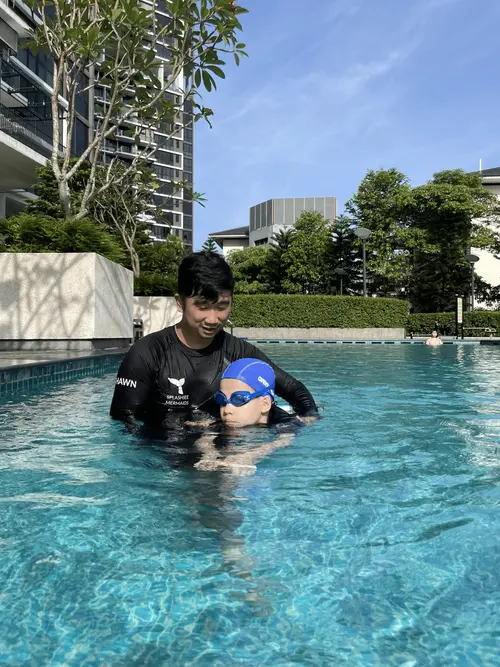
The American Academy of Dermatology recommends a swim cap for anyone who swims laps, to keep hair out of harm’s way. We suggest wearing the cap on top of the wet-and-condition step rather than instead of it, so any water that does get underneath meets hair that is already protected.
If your hair is long, gather it into a low bun before the cap goes on. The cap is easier to fit that way, and the ends stay tucked in rather than trailing out at the back of your neck.
Rinse, Wash and Condition After the Pool
Once you are out, rinse your hair right away, before the pool water has a chance to dry into it. The American Academy of Dermatology then advises washing with a shampoo made for swimmers, which is formulated to remove chlorine, and finishing with a deep conditioner to put moisture back.
If your hair is curly or coily, Dr Oyerinde suggests moisturising shampoos, such as sulfate-free or chlorine-specific formulas. Sulfates are the strong foaming agents in many everyday shampoos, and Dr Falkner also recommends a sulfate-free wash straight after swimming.
Swimming Hair Care for Weekly Lessons
If you are taking a course of lessons and swimming every week, the build-up matters more than any single swim. Dr Falkner recommends a weekly clarifying shampoo for anyone who swims regularly, followed by a gentle conditioner. A clarifying shampoo is a stronger wash designed to lift the residue that ordinary shampoo leaves behind.
Save the clarifying shampoo for that weekly wash and use your gentler shampoo the rest of the time. If you are still deciding how often to swim at all, our guide on how often women should swim to stay fit covers the fitness side, and this routine works at any frequency.
Braids, Buns, Curls and Coloured Hair
Protective styles help. Dr Falkner points to a bun or braids as a simple way to reduce how much hair is exposed, either on their own or under a cap. For long hair, we would pick a braid or bun under a cap over loose hair every time.
Coloured, bleached or permed hair needs the full routine at every swim, since chlorine can fade colour and bleached hair also picks up copper most easily. If you have just coloured your hair, ask your hairdresser how long to wait before your next swim. This routine protects healthy hair. It will not repair hair that is already badly broken, and a hairdresser is the right person to help with that.
How Pool Water Is Managed in Singapore
Chlorine in public pools is not optional, and that is a good thing. The National Environment Agency requires licensed pool operators to test the water’s acidity, known as pH, and its chlorine level on site every day, because the right chlorine level kills germs that can cause stomach illness and irritation for swimmers.
So the aim is never to find chlorine-free water. It is to look after your body around it. Our article on whether swimmers’ skin ages faster covers the skin side, and if your eyes are sore, read whether chlorine makes an eye infection worse before your next swim.
Hair Worries Should Not Keep You Out of the Pool
We would rather you arrive at a lesson with wet, conditioned hair under a cap than skip it because of what the pool might do to your hair. If hair has been the reason you have put off learning, our ladies swimming lessons are a comfortable place to start, and you can raise any concerns with us before your first class.
Some women also feel more at ease learning with a female swimming coach. The long-term benefits of swimming are worth looking after your hair for, and we cover some of them in our article asking do swimmers age slower.
Frequently Asked Questions

Can a swim cap damage my hairline?
It can if it grips too tightly. Dr Oyerinde’s advice is to use a cap that is not too tight along the edges of the hair at your forehead, so choose one that sits snugly without pulling at your edges.
How soon after swimming should I wash my hair?
Rinse with plain water as soon as you are out. According to Dr Oyerinde, the full shampoo can follow within the next few hours, then a deep conditioner. If you only have time for one thing poolside, make it the rinse.
Is sea water kinder to hair than a chlorinated pool?
Not really. Dermatologists at the University of Alabama at Birmingham note that salt water tangles hair as it dries, while chlorine leaves it feeling rough, and both can dull coloured or chemically treated hair. Rinse after either kind of swim.
Is chlorine bad for your skin too?
It can be. Chlorine is drying, and repeated exposure can cause itching and irritation, according to the same University of Alabama at Birmingham advice. Rinse off right after your swim, pat your skin dry and apply a thick, plain moisturiser straight away.
Click on the link to find out more about Splashiee Mermaid’s lesson package. Chat with our head coach today!
Home
About Splashiee Mermaids
Swimming Coach
SwimSafer
Private Swim Lessons
Group Swimming Lesson
Ladies Swimming Lessons
Childs Swimming Lessons
Whatsapp Us