Do You Need Coordination To Swim?
Do You Need Coordination To Swim And Why It Is More Important Than You Think
Many beginners assume swimming is mostly about strength or stamina. After a few lessons, however, they start asking a different question: do you need coordination to swim? The honest answer is yes. Coordination plays a crucial role in how smoothly, safely, and efficiently you move through water.
Swimming requires your arms, legs, breathing, and core muscles to work together in harmony. Without coordination, movements become scattered and tiring. With coordination, strokes feel controlled and balanced. You glide rather than struggle.
In Singapore, where swimming is both a recreational activity and an essential life skill, understanding whether you need coordination to swim helps learners approach lessons with realistic expectations and a stronger focus on technique.
How Coordination Connects Arms, Legs And Breathing
To fully answer do you need coordination to swim, it helps to break down what happens during a simple stroke like freestyle. While one arm pulls through the water, the other recovers above it. At the same time, the legs perform a flutter kick, and breathing must align with arm rotation.
If timing is off, the body may tilt sideways or sink. Breathing may become rushed or inconsistent. Energy drains quickly. Coordination ensures that these movements flow together rather than compete against one another.
Research referenced by the National Library of Medicine highlights that coordinated motor control improves movement efficiency in aquatic activities. This means swimmers who develop coordination conserve more energy and maintain better posture in the water.
So yes, coordination is not optional. It is fundamental.
Why Beginners Often Struggle Without Coordination
Many adults and children who are new to swimming experience frustration because they try to focus on everything at once. They kick harder, pull faster, and lift their heads higher to breathe. Instead of improving, they feel more tired.
This is where the question do you need coordination to swim becomes very clear. Strength alone does not solve the problem. Without coordinated timing, extra effort often creates more imbalance.
For example, lifting the head too high to breathe disrupts body alignment. Kicking too aggressively without arm rhythm wastes energy. Proper coordination balances effort and allows movements to support each other.
According to Harvard Health Publishing, rhythmic breathing and controlled movement improve endurance and reduce strain during exercise. These same principles apply directly to swimming.
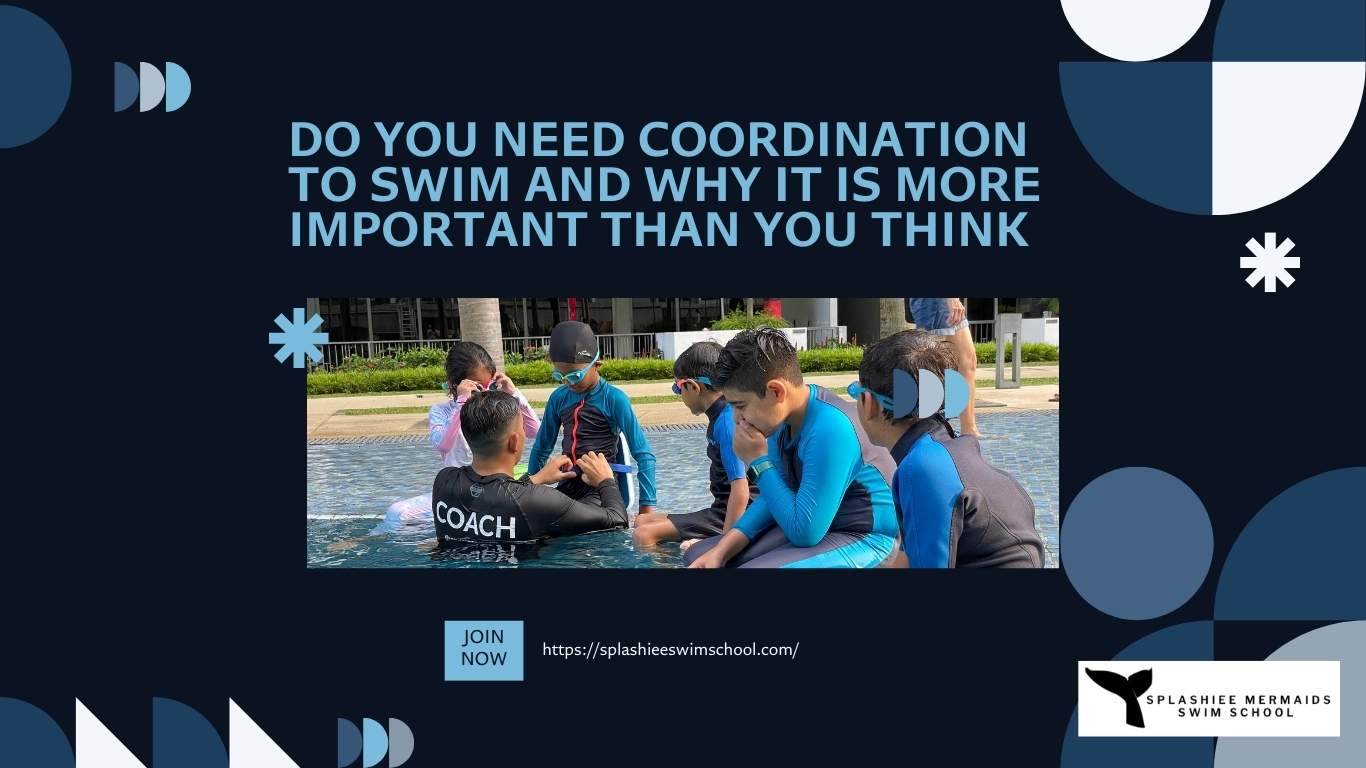
Do You Need Coordination To Swim Safely
Beyond technique, coordination also influences safety. When swimmers lose rhythm, they may panic or fatigue quickly. Uncoordinated breathing can lead to swallowing water or sudden breathlessness.
This is especially important in deeper pools or unfamiliar environments. A coordinated swimmer remains calm and balanced. An uncoordinated swimmer may feel unstable and anxious.
The SwimSafer programme reinforces this by teaching controlled floating, steady breathing, and balanced body positioning. These skills rely heavily on coordination. Without them, maintaining buoyancy becomes harder.
Water safety initiatives supported by Sports Singapore emphasise water competency as a lifelong skill. Coordination forms part of that competency, helping swimmers respond calmly to unexpected situations.
Can You Learn To Swim If You Feel Uncoordinated
A common concern among adults is whether poor coordination prevents them from learning to swim. If you have ever wondered do you need coordination to swim even if you are not naturally athletic, the reassuring answer is that coordination can be developed.
Coordination is not an inborn talent reserved for athletes. It improves with guided practice. Swimming lessons often begin with simple exercises that isolate individual movements. Kicking drills, arm drills, and breathing exercises are introduced separately before being combined.
Over time, these isolated skills connect naturally. Repetition strengthens neural pathways, allowing movements to feel automatic rather than forced.
Adult learners often notice that after several sessions, actions that once felt confusing begin to flow smoothly. Patience and consistent instruction are key.
How Adult Swimming Classes Develop Coordination
Adult swimming classes are structured specifically to build coordination progressively. Instructors break down strokes into manageable components, ensuring learners are not overwhelmed.
For example, learners may practise floating and breathing first to establish balance. Arm movements are added slowly, followed by coordinated kicking. Once each component feels stable, full stroke practice begins.
If you are exploring structured lessons, our article Adult Swimming Classes explains how progressive teaching methods support both technique and water safety.
Coordination is developed step by step, making swimming accessible even for beginners who initially feel awkward in water.
The Relationship Between Coordination And Endurance
Many swimmers assume endurance comes from stronger muscles. While strength helps, coordination plays a bigger role than most realise. When movements are synchronised, the body works efficiently. Energy is conserved rather than wasted.
A coordinated swimmer uses less effort to travel the same distance. Breathing aligns with strokes. The body remains horizontal. Resistance decreases. This efficiency builds stamina naturally.
Without coordination, swimming feels exhausting even over short distances. With coordination, swimming becomes smoother and more sustainable.
Conclusion: Do You Need Coordination To Swim
So, do you need coordination to swim? Absolutely. Coordination connects arms, legs, breathing, and balance into one smooth system. It improves efficiency, enhances safety, and builds confidence in the water.
The good news is that coordination is not fixed. It can be learned, refined, and strengthened through structured practice. With the right guidance, even beginners who feel uncoordinated can develop rhythm and control.
If you are ready to build stronger coordination and swim more confidently, visit Splashiee Mermaids Swim School to explore lessons designed to improve technique, balance, and real-life water readiness.
FAQ
Q: Do you need coordination to swim effectively?
A: Yes. Coordination ensures arms, legs, and breathing work together smoothly.
Q: Can beginners learn coordination for swimming?
A: Yes. Coordination improves with guided practice and structured lessons.
Q: Does coordination affect swimming safety?
A: Yes. Coordinated swimmers conserve energy and remain balanced, reducing panic risk.
Q: Is coordination part of SwimSafer training?
A: Yes. SwimSafer includes balance and controlled movement as key water competency skills.
Click on the link to find out more about Splashiee Mermaid’s lesson package. Chat with our head coach today!
Home
About Splashiee Mermaids
Swimming Coach
SwimSafer
Private Swim Lessons
Group Swimming Lesson
Ladies Swimming Lessons
Childs Swimming Lessons
Whatsapp Us